Gutters in Howell, NJ, Sized to the Roof Above Them

Seamless gutters formed on site, guards matched to your trees, and every downspout followed to where its water lands.

Howell Gutters has spent 20+ years installing, repairing and cleaning gutters in Howell, NJ, and we also handle gutter guards, full gutter replacement, soffit and fascia repair, downspout installation, copper gutters and commercial gutter systems. Our seamless gutters are formed on site from coil, one piece for each run of the house, and every gutter and downspout is sized for the roof area that actually drains into it.

A gutter is only half of the job. The other half is where the water goes after it leaves the downspout, so we follow every leader to the spot where it lets go. If it is dumping against the foundation, we propose an extension, a pop-up emitter or a drywell, and the estimate says where each outlet will discharge.

We write estimates the way New Jersey expects them to be written. New gutters and repairs sit on separate lines because the state taxes them differently, the contract follows the state’s home improvement rules, including the three-day cancellation notice, and every cleaning and repair comes with before-and-after photos.

Get Your Free Quote

Fast response • No obligation

So we can reach you about your request.

So we can send you a confirmation after you submit this inquiry form.

  • 20+ Years in Business
  • Seamless Gutters Formed On Site
  • Before-and-After Photos

What we do

Our Services

Seamless gutters, guards and cleaning in Howell, NJ

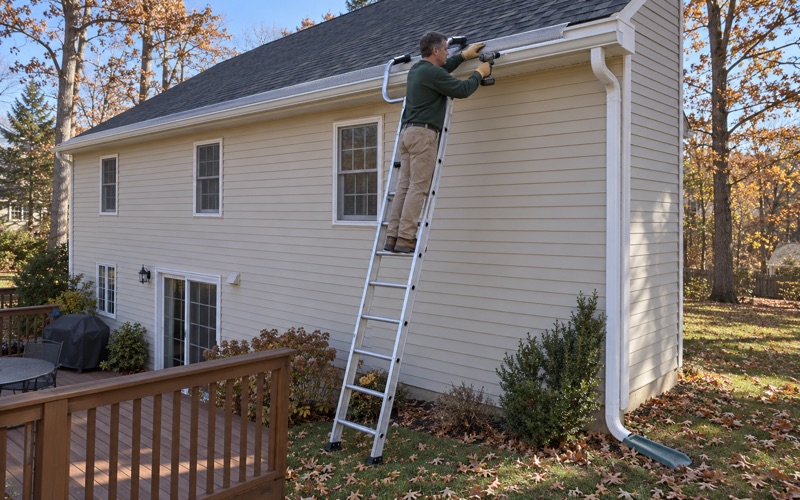
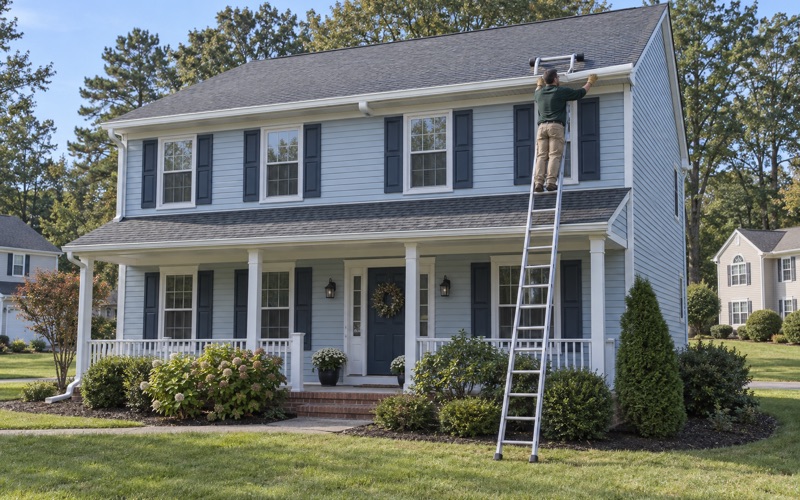
A new seamless gutter being seated into its hidden hangers along the second-story eave of a Howell colonial.

Gutter Installation

Seamless gutters formed on site and sized to the roof, with fascia checked and every downspout outlet planned before we leave.

A stainless mesh gutter guard panel being fastened to the front lip of an oak-shaded gutter in Howell.

Gutter Guards

Gutter guards chosen for the trees over your roof, from stainless micro-mesh for pine needles to screens for oak and maple leaves.

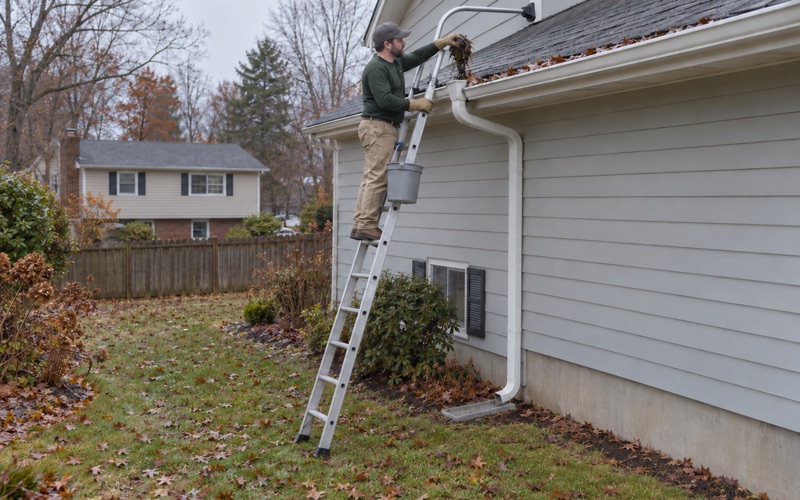
A packed plug of leaves and twigs being pulled out of a gutter outlet on a Howell split-level, rainwater standing in the trough behind it.

Gutter Cleaning

Gutter cleaning that flushes every downspout, bags the debris and sends you before-and-after photos of the work.

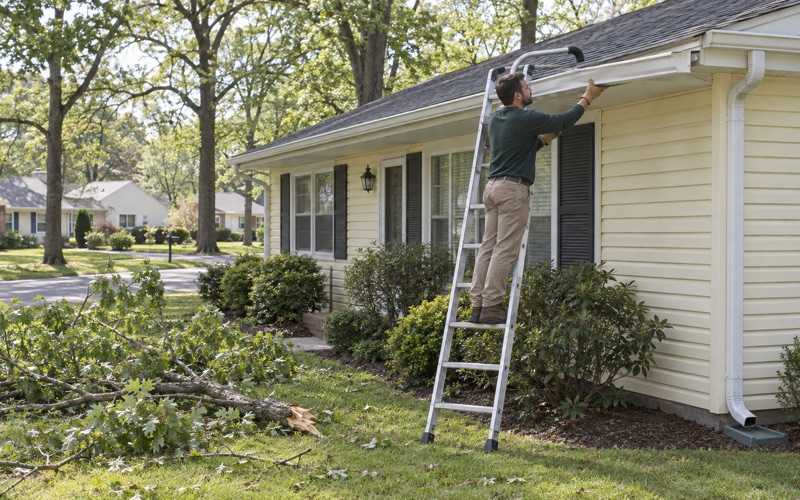
A gutter pulled loose by a fallen oak limb being lifted back to the fascia on a Howell ranch.

Gutter Repair

Leaking seams, sagging runs, rotted fascia and blocked downspouts fixed, with before-and-after photos of every repair.

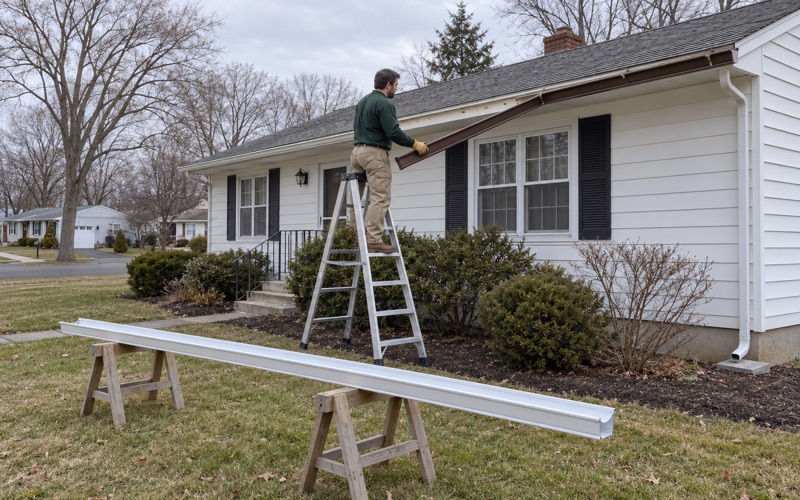
An old spiked gutter being lowered from a Howell ranch, its seamless replacement waiting on sawhorses on the lawn.

Gutter Replacement

Worn-out gutters replaced with seamless runs formed on site, resized to the roof and hung on hidden hangers over sound fascia.

A new vinyl soffit panel being slid into place under the eave of a Howell colonial before its gutter goes back up.

Soffit And Fascia Repair

Rotted fascia and damaged soffits found, shown to you and replaced, so the gutters above them have sound wood to hang from.

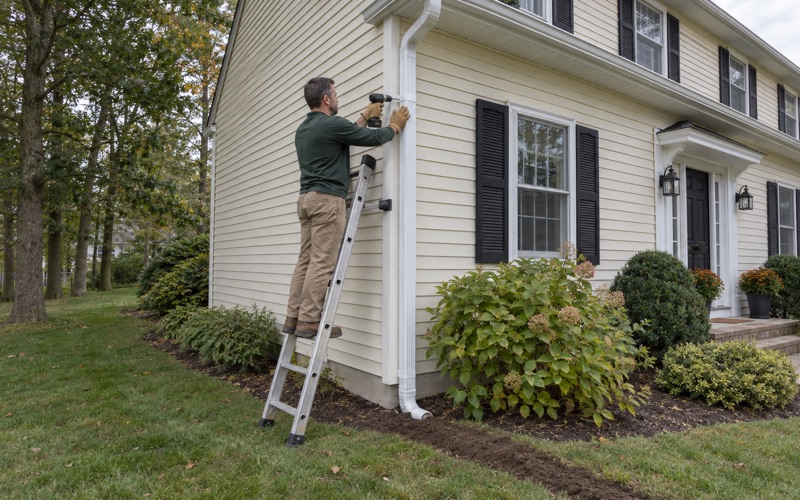
A new downspout being strapped to the corner of a Howell colonial above a buried drain line.

Downspout Installation

Downspouts sized to the roof and routed to an extension, pop-up emitter or drywell, so roof water lands away from the house.

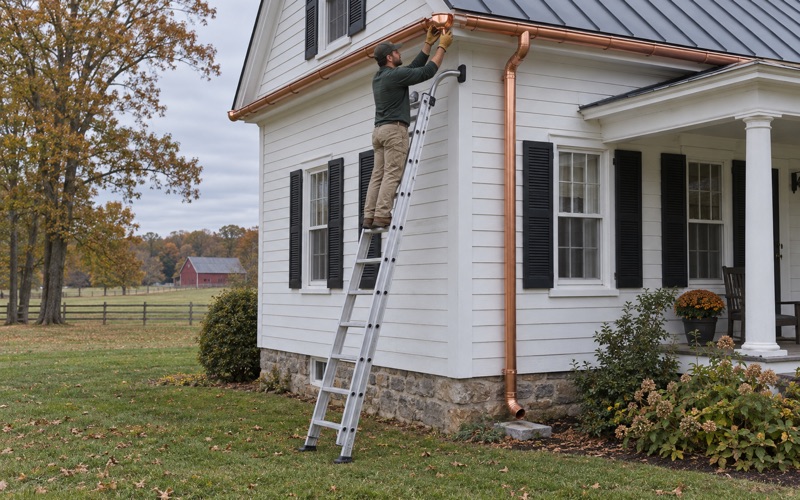
A copper miter being fitted at the corner of a half-round copper gutter on an older white farmhouse in Howell.

Copper Gutters

16-ounce copper gutters in half-round or K-style profiles, hung on copper hardware and matched to the age and style of the house.

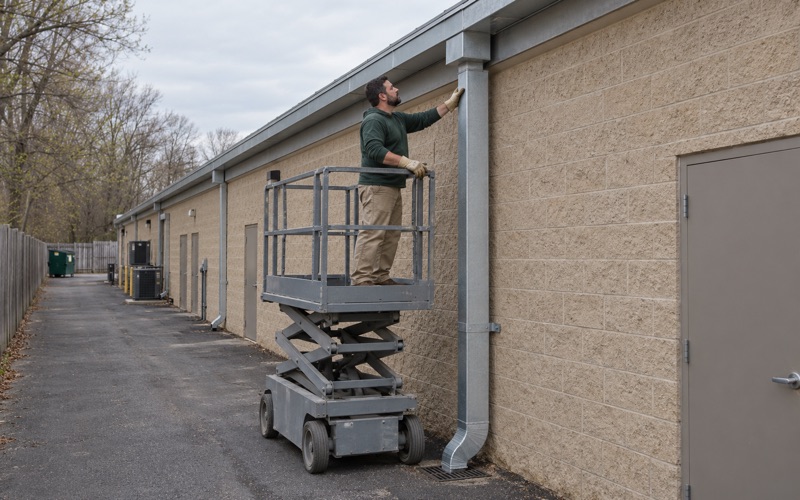
An oversized leader being seated under the box gutter of a one-story shopping strip along a highway in Howell.

Commercial Gutters

Oversized seamless gutters, box gutter repair and scheduled cleaning for commercial buildings, condo associations and rental properties.

Two Decades of Gutter Work

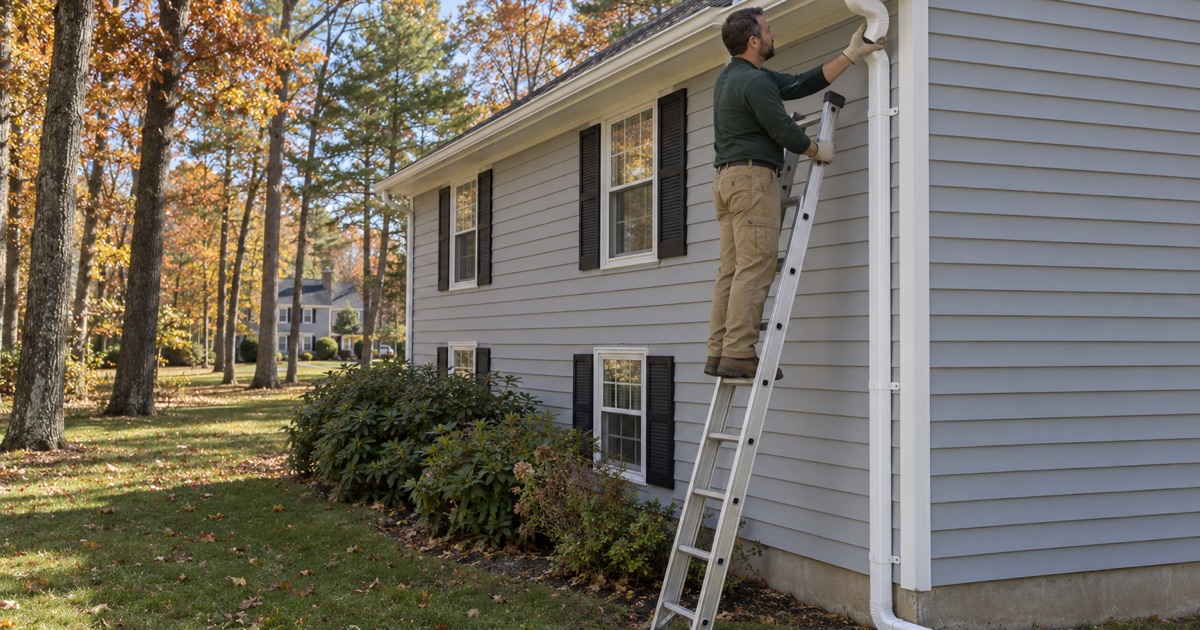
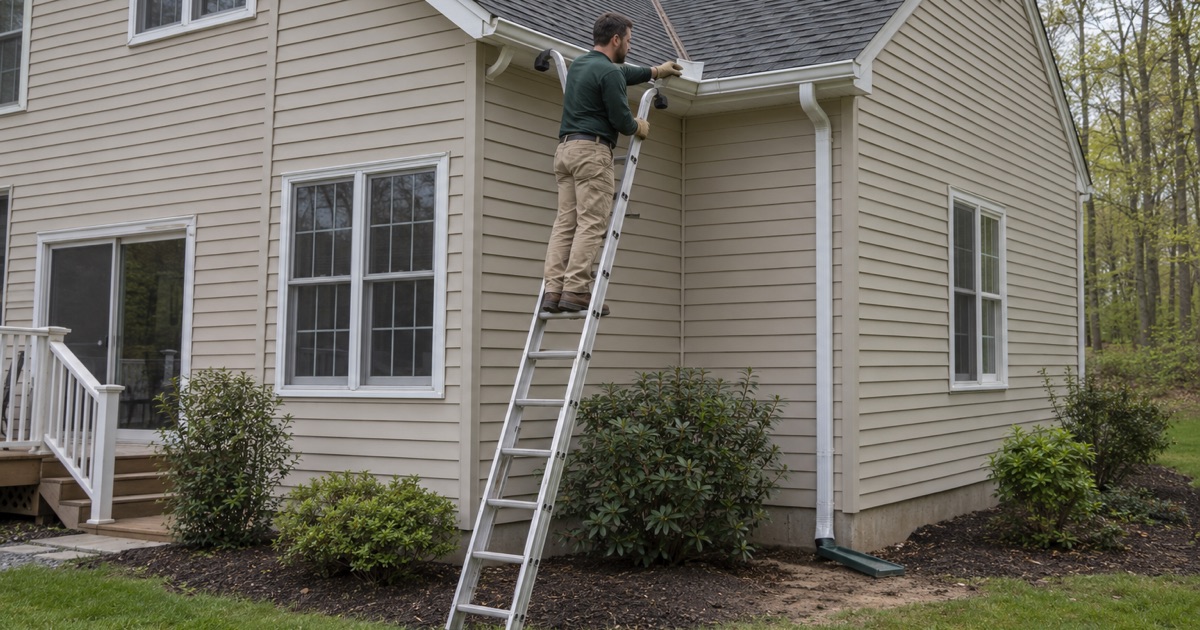
A gutter installer fitting the top elbow of a new downspout under the eave of a 1980s colonial on a wooded lot in Howell.

20+ Years in the Gutter Business

Howell Gutters has been in business for more than 20 years, and gutters are the whole of what we do. That focus is why we carry the forming machine, the coil and the fittings for every common profile, and why the questions on this page are ones we answer every week rather than once a season.

Why Choose Howell Gutters

Gutters Sized to the Roof

Every gutter run is sized from the roof area that drains into it, so a long, steep rear plane gets 6-inch K-style and 3x4 downspouts where it needs them, rather than the same 5-inch gutter wrapped around the whole house because that is what the truck had on it.

Downspouts Followed to the Ground

No leader is finished at the bottom elbow. We trace where each one discharges, and on Howell lots where the township’s plot plans track seasonal high groundwater and drainage swales, we propose an extension, emitter or drywell so roof water stops pooling at the foundation rather than simply hanging a new downspout over the old puddle.

Rotted Fascia Shown First

Before a new gutter goes up, we probe the fascia behind it and show you any soft wood with your own eyes, so new gutters are never screwed into rot that will let them sag within a season, rather than covering the damage and leaving it for the next contractor to find.

Guards Matched to Your Trees

Pitch pine needles and oak leaves fail gutter screens in different ways, so we pick the guard for the trees actually overhanging your roof, rather than selling one product for every house regardless of what falls on it.

Association Rules Checked First

In Howell’s 55+ communities and condo associations, responsibility for gutters varies from one master deed to the next. We check with the management office or the deed before quoting, so you never pay for work the association already covers, rather than finding out after the invoice.

New Gutters and Gutter Replacement

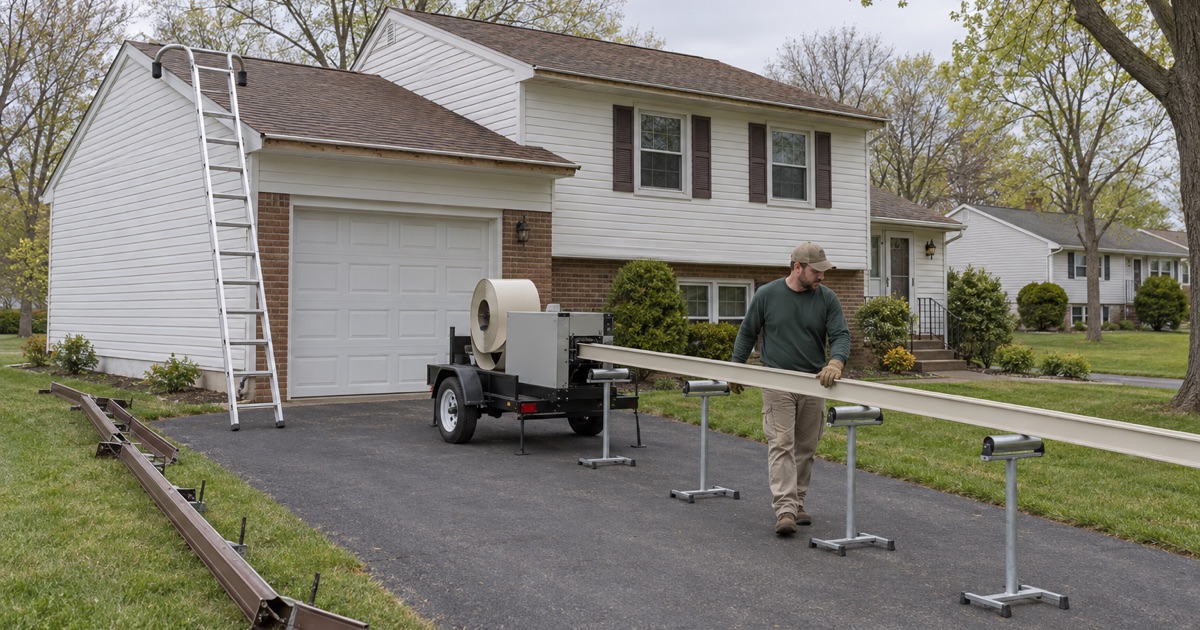
A new seamless gutter length coming out of a forming machine in the driveway of a Howell split-level, the old sectional gutter lying on the lawn.

Seamless Aluminum Gutters Formed On Site

A seamless gutter is one length of aluminum rolled from coil by a forming machine parked in your driveway and cut to the exact length of each eave. We run .032 aluminum gutter coil, so each run of the house goes up in one piece, with joints only where box, strip or bay miters turn a corner. Fewer joints means fewer places for sealant to age out and start dripping onto a walkway.

5-Inch or 6-Inch Gutters for a Big Roof

Five-inch K-style is the size most houses were built with, and it works on a modest roof plane with a short run. A long, steep plane that sheds a lot of water into a single gutter is a different case, and that is where we specify 6-inch seamless gutters with 3x4 downspouts. We measure the roof area draining to each run before choosing, instead of picking one size for the whole house out of habit.

K-Style or Half-Round Gutter Profiles

K-style gutters have a flat back and a front that echoes crown molding, and they carry more water than a half-round gutter of the same width. Half-round gutters with a double-bead profile suit older colonials, farmhouses and homes with exposed rafter tails. We recommend the profile that handles the roof’s water load and still fits the age and style of the house.

Copper, Galvalume and Zinc Gutter Systems

Aluminum covers most houses, but some homes call for a heavier metal that lasts longer and looks the part. We install 16-ounce copper gutters that weather from bright penny to brown and eventually toward a green patina, and we can talk through galvalume steel or zinc when an owner wants durability without the copper look. Each metal gets its own compatible hangers and fasteners, because dissimilar metals corrode where they touch.

Hidden Hangers Instead of Spikes and Ferrules

Older gutters were often hung with long spikes driven through ferrule tubes into the fascia, and after years of freezing and thawing those spikes back out and the gutter sags. We fasten new gutters with hidden hangers screwed into the fascia at close, even spacing, which keeps the gutter’s shape under a load of wet leaves or snow. Spike heads popping out along an eave are usually the first sign that the hanging system is failing.

When 30-Year-Old Gutters Should Be Replaced

Howell’s biggest decade of home building was the 1980s, which produced 5,318 of the township’s current housing units, so a lot of local gutters are original or on their second set. A sound run with one leaking seam is worth repairing. When the metal is thin and dented, the pitch is wrong end to end and several joints leak, replacement is usually the better use of the money, and in New Jersey replacing exterior gutters and leaders counts as ordinary maintenance under N.J.A.C. 5:23-2.7(c)1.xvi, with no construction permit required.

Gutter Apron, Drip Edge and Kickout Flashing

Water running off shingles can curl back under the roof edge and run down the fascia behind a gutter. A gutter apron or drip edge bridges that gap so the water lands in the trough, and a kickout flashing at the bottom of a roof-to-wall joint turns water into the gutter instead of down the siding. We check for all three on every installation, because a new gutter cannot catch water that the roof edge sends behind it.

Rotted Fascia Boards Behind Old Gutters

The fascia board is what a gutter hangs from, and it is often soft by the time an old gutter comes down. We replace rotted sections before the new gutter goes up, after showing you the damage. On a house built before 1978 with painted trim, that work falls under the EPA Renovation, Repair and Painting rule (40 CFR 745), which governs how painted surfaces may be disturbed.

Gutter Guards and Gutter Cleaning

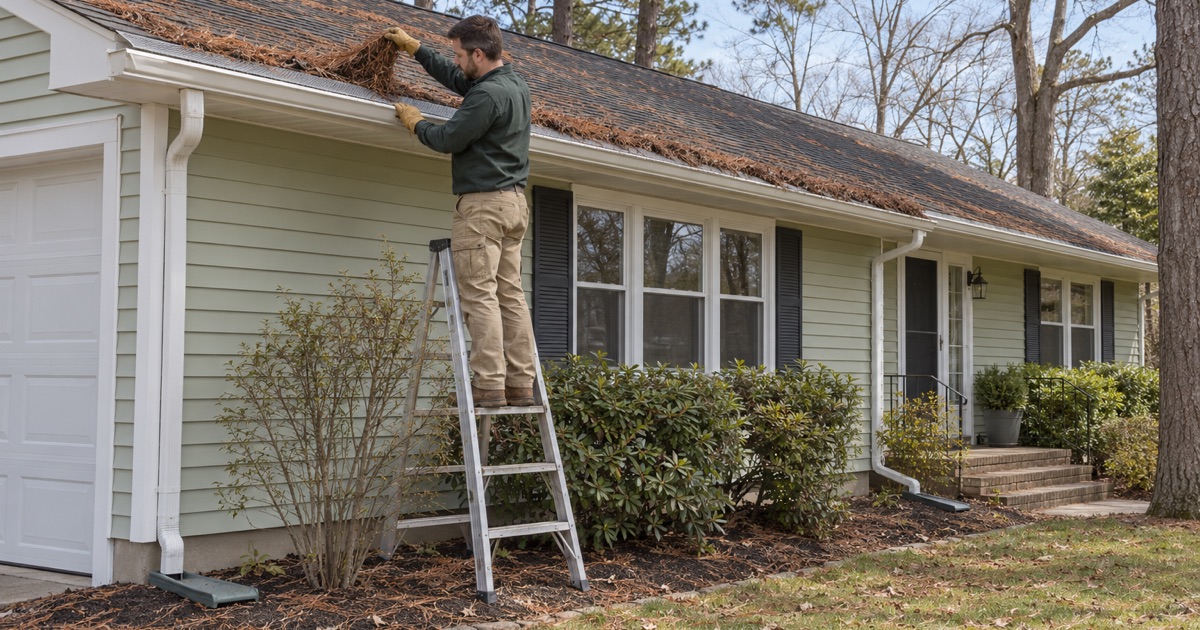
A mat of pine needles being lifted off the top of a gutter guard on a Howell ranch, the gutter underneath still clear.

Cleaning Gutters Before and After Leaf Season

Most homes need a gutter cleaning once the leaves are down, and lots with heavy canopy often need another in late spring when seed pods and blossoms land. Howell’s own curbside leaf collection in 2025 began on or about November 3, which makes a handy marker: by the time those piles are at the curb, the gutters above them are usually full. Every cleaning visit flushes each downspout and bags the debris, so nothing is left on the lawn or at the curb.

Pine Needles Versus Oak Leaves in the Gutters

Pitch pine needles are thin and stiff, so they slip through coarse screens and knit into mats in the downspout elbows. Oak leaves are broad and soft, and they pile on top of the gutter and break down into a heavy sludge that holds water against the metal. A lot with both clogs in two different ways, and cleaning schedules and guard choices should follow the trees actually overhanging the roof.

Micro-Mesh, Screen, Brush and Foam Gutter Guards

Stainless steel micro-mesh gutter guards stop pine needles and shingle grit while still letting heavy rain through, which makes them our usual answer under conifers. Perforated screens are cheaper and work well under broadleaf trees, but needles slide through them. Brush and foam inserts sit inside the gutter and are simple to install, yet both trap debris in place and need regular pulling and rinsing to keep working.

Are Gutter Guards Worth It?

Guards earn their cost when a house sits under trees, when the gutters are two or three stories up, or when the owner cannot or should not be on a ladder. No guard is maintenance free; even micro-mesh needs an occasional brushing to clear pollen and fine debris off the top. On an open lot with few trees, a cleaning or two a year often costs less than guards, and we will say so.

Guards on Existing Gutters or a One-Piece Hooded System

If your gutters are sound, properly pitched and well fastened, guards can be added to them. If they are sagging, leaking or undersized, adding guards just protects a failing gutter, and a new seamless gutter with guards fitted at the same time is the better job. One-piece hooded systems combine the gutter and cover in a single unit, and we explain how they compare with a separate guard on your roof.

Birds’ Nests, Plants and Mosquitoes in the Gutters

A gutter that holds standing water becomes a breeding spot for mosquitoes, and Monmouth County Mosquito Control advises keeping gutters clean and properly pitched for exactly that reason. Clogged gutters also collect enough soil for seedlings to sprout and give birds a sheltered ledge to nest on. We clear all of it, check the pitch, and point out any sag where water will keep pooling.

Flushing Clogged Downspouts

A gutter can look clean from the ground while the downspout below it is packed solid. On every cleaning we run water through each downspout to confirm it drains, clearing elbows by hand or with a plumber’s snake when debris has compacted. If a downspout ties into an underground line, we flush that too and tell you whether the water comes out at the far end.

Do Gutter Guards Cause Ice Dams?

Ice dams form when heat escaping through the roof melts snow, and the meltwater refreezes at the cold eave, so the cause sits in the attic rather than in the gutter. Guards do not create that heat loss, but a guard can hold a layer of snow and ice on top of the gutter once a dam forms. We choose guards that sit flush with the roof line and do not lift the shingles, which keeps them from making a winter problem worse.

Overflowing Gutters, Leaks and Water at the Foundation

A splash guard being set at the inside corner of a Howell colonial’s gutter, where roof valley water overshoots the trough.

Gutters Overflowing in Heavy Rain

Overflow in a heavy rain usually means a clog, too few downspouts, a gutter too small for the roof above it, or a run pitched the wrong way. On August 13, 2018, a National Weather Service flood warning reported 5 to 8 inches of rain in a single morning, with Howell among the hardest-hit towns, and storms like that expose every one of those weaknesses at once. We find which one is causing your overflow before suggesting a fix, because adding a downspout does nothing for a gutter pitched backward.

Water Dripping Behind the Gutter

Water running down the wall behind a gutter usually means there is no gutter apron or drip edge, or the gutter hangs too low below the roof edge. Over time that water rots the fascia and stains the siding. We correct the height or add the flashing so runoff lands inside the trough where it belongs.

Leaking Seams, Corners and End Caps

On sectional gutters every joint is a potential leak, and even seamless gutters rely on sealed miters, end caps and outlets. When the old sealant has dried and cracked, we clean the joint down to bare metal and reseal it with tripolymer gutter sealant, which stays flexible through summer heat and winter cold. A joint that has split or corroded through gets a new miter or end cap instead of another layer of caulk.

Sagging Gutters Pulling Away From the House

A gutter that sags or pulls away from the house is usually hanging on loose spikes, too few hangers or a fascia that has gone soft. We refasten it with hidden hangers, reset the pitch and replace rotted fascia where we find it. A gutter left sagging holds water in the low spot, which adds weight and speeds up the next failure.

Underground Downspout Line Backing Up

When water bubbles up around the base of a downspout that feeds an underground pipe, the line is clogged, crushed or was never given an outlet. We flush it from the top and check the outlet at the other end, and if water still will not move, we dig at the problem spot. Sometimes the right fix is a new line with a pop-up emitter at a low point in the yard.

Water in the Basement After Rain

A downspout dumping beside the foundation is one of the most common reasons a basement takes on water after a storm. We start by tracing every leader around the house and seeing where its water ends up. Gutters do not replace interior drainage or waterproofing, but moving roof water away from the walls often solves the problem that made a homeowner call a waterproofer in the first place.

Downspout Extensions and Grading Away From the Foundation

The 2021 International Residential Code, New Jersey edition, calls for grade to fall 6 inches within the first 10 feet from the foundation (R401.3). A downspout that empties against a foundation without that fall just recycles roof water into the basement wall. Extensions, splash blocks and pop-up drainage emitters move the outlet out to where the ground can carry water away.

Dry Wells and Underground Downspout Lines

When a yard has nowhere to send water on the surface, a drywell lets roof water soak into the ground below it. New Jersey’s stormwater rule, N.J.A.C. 7:8, calls for a drywell to sit at least 2 feet above the seasonal high water table, and Howell’s plot plan requirements under Section 188-31 show the seasonal high water table and drainage swales for a lot. We check what is known about the groundwater before proposing one, because a drywell sitting in groundwater simply fills up and stops working.

Ice in the Gutters and Heat Cable

A gutter packed with ice gains a great deal of weight and can pull away from the fascia, and meltwater backing up behind it can find its way under shingles. Self-regulating heat cable run in a zigzag along the roof edge and down through the gutter and downspout keeps a channel open for meltwater. It treats the symptom on a known problem eave; attic insulation and ventilation address the cause.

Associations, Inspections and Paying for Gutter Work

A gutter end cap being replaced at the end unit of a building of attached ranch homes in a Howell adult community.

Adult Communities: Owner or Association Gutters

Who pays for gutters in a 55+ community depends on that community’s documents. At The Villages, 670 attached ranch homes built between 1967 and 1975, the community description says exterior maintenance includes repairs to roofs and gutters, while other Howell communities cover only lawn care and snow removal. We check the master deed or call the management office first, so you know whether the gutter is yours to fix before you pay for anything.

Gutter Work for Condo Boards and Property Managers

Condo boards and property managers need gutter work scheduled building by building, priced in a way the board can approve, and documented for the file. Before-and-after photos from every visit give the manager a record of what was cleaned or repaired on each building. We can quote a full community cleaning or a replacement phased over several budget years.

Gutter Problems on a Home Inspection Report

New Jersey requires licensed home inspectors to inspect and report deficiencies in the roof drainage system (N.J.A.C. 13:40-15.16), so loose, leaking or misdirected gutters often turn up on an inspection report during a sale. We can look at the items flagged, tell you which are minor repairs and which need replacement, and put the answer in writing for the buyer or seller.

What Homeowners Insurance Covers for Gutters

Homeowners policies generally respond to sudden damage, such as a falling limb or a storm tearing a gutter loose, and generally exclude wear, rot and neglected clogs. Your own policy decides, so read it or call your agent before assuming either way. When a claim is in play, our photos and written estimate give the adjuster a clear record of the damage.

Registered Contractors, Written Contracts and the Three-Day Right to Cancel

New Jersey requires home improvement contractors to register with the state, a requirement updated by the Contractors’ Business Registration Act (P.L.2023, c.237), and any contractor should be able to show you a registration number. Our contracts are written to the state’s home improvement rules, including notice of your three-day right to cancel. Read that notice, and expect the start date, price and scope to be spelled out in writing.

Sales Tax on New Gutters Versus Gutter Repair

The New Jersey Division of Taxation’s publication S&U-2 treats new gutters as an exempt capital improvement, documented with Form ST-8, while repairing existing gutters is a taxable repair. That is why our estimates list new gutters and repair work on separate lines. You see what each costs, and the tax lands on the right part of the job.

What New Gutters Cost on a 2,000-Square-Foot House

Two houses with 2,000 square feet of living space can need very different amounts of gutter, because the price follows linear feet of eave, the number of stories, corners and downspouts, not floor area. A single-story ranch spreads its roof wide, while a two-story colonial stacks it, and gutter guards, fascia replacement or underground lines add to either. We measure every run and give you an itemized written price instead of a per-square-foot guess.

Where a Leader Is Allowed to Discharge

In Howell, roof water may not go into the sanitary sewer. Township Code Section 252-21 makes it a violation to connect or discharge drainage into the sewer system, and we never tie a leader outlet into a sanitary line. The estimate names where each downspout will discharge, whether that is a lawn, a pop-up emitter or a drywell.

Commercial and Box Gutters

Commercial buildings often carry larger gutters, wide-flange outlets and oversized downspouts sized for broad, low-slope roofs. Box gutters, built into the roof edge rather than hung from the fascia, show up on older and commercial buildings and depend on a sound lining to stay watertight. We repair, reline or replace both, and we schedule commercial work around business hours when tenants need the entrances open.

Areas We Serve

Howell Gutters provides gutters throughout the greater Howell area, with the same crews and the same standards on every job.

Good to know

Frequently Asked Questions

How often should gutters be cleaned?

Most houses need a cleaning once the fall leaves are down, and a lot with heavy overhanging trees usually needs a second visit in late spring after seed pods and blossoms drop. Pitch pines shed needles year round, so a roof under them may need a check between those two visits. We can set a schedule after seeing what actually lands on your roof.

Are seamless gutters completely free of seams?

Each straight run is one continuous piece, formed from coil at your house to the exact length of the eave. The joints that remain are at the corners, where two runs meet in a mitered joint, and at the end caps and downspout outlets. Those few joints are sealed with tripolymer sealant, which is far fewer places to leak than a sectional gutter snapped together every ten feet.

What thickness of aluminum do you use?

We form our seamless gutters from .032 aluminum coil. Thinner coil is common on bargain installations, and it dents under a ladder, bends when wet leaves and snow sit in it, and lets hangers pull through over time. The heavier coil holds its shape between hangers and keeps the pitch we set on installation day.

What size downspouts should my house have?

Many older houses have 2x3 downspouts, which are easily choked by leaves and cannot keep up with a long roof plane in a downpour. On new installations we generally run 3x4 downspouts, and on 6-inch gutters they are the standard pairing. The number and placement of downspouts matters as much as the size, so we lay them out by how much roof drains to each one.

Should I replace my gutters before or after a new roof?

If both are due, the roof usually goes first, because roofers often need the gutters off to install drip edge and finish the roof edge properly. New gutters then hang against a fresh roof edge and fascia. If your gutters are fairly new and in good shape, they can often be taken down and rehung, and we can tell you whether that makes sense.

Can new gutters match the color of my trim?

Aluminum gutter coil comes prefinished in a wide range of colors, from white and almond to browns, grays and black, and downspouts are made to match. We bring color samples to the estimate so you can hold them against your trim and siding. Copper is the exception, since it is left unpainted and changes color as it weathers.

How long does a gutter installation take?

A typical single-family house is often finished in one working day, since the gutters are formed on site rather than ordered and shipped. Fascia repair, added downspouts, underground lines or a drywell add time, and those items are listed on the estimate so you know the scope before we start. Weather can move a date, and we call ahead if it does.

Do I get proof that the cleaning was done?

Yes. Every cleaning and repair comes with before-and-after photos, so you can see the gutters and downspouts without climbing a ladder yourself. That matters most when you are away, when you manage a rental or when an association needs a record of the work. The photos also show any loose hangers, leaking corners or soft fascia we noticed while we were up there.

Why does your estimate split new gutters from repairs?

New Jersey taxes the two differently. Installing new gutters is treated as a capital improvement, documented on Form ST-8, while repairing existing gutters is a taxable repair. Listing them on separate lines keeps the tax right and lets you see exactly what each part of the job costs, which helps if you decide to do one part now and the rest later.

Ready to Get Started?

Request a free quote today and we'll get back to you fast.