
Howell Gutters provides soffit and fascia repair in Howell, NJ, as part of the 20+ years we have spent working at the roof edge, serving surrounding cities including Ramtown, Freehold Township, Wall, West Freehold and Vista Center. Fascia and soffit damage almost always starts with water that the gutters failed to catch, so we repair the wood and correct the reason it rotted in the same visit.
Whenever a gutter comes down, the fascia behind it gets checked before anything new goes up. We probe the board along its length, and if we find soft wood, we show it to you before replacing it. You see the damage for yourself rather than taking a contractor’s word that it was there.
Repair work is quoted on its own line, separate from any new gutters, because New Jersey taxes repairs and new gutter installations differently. That keeps the estimate clear when fascia repair and a gutter replacement are done together.
Fascia Board Repair Behind the Gutters
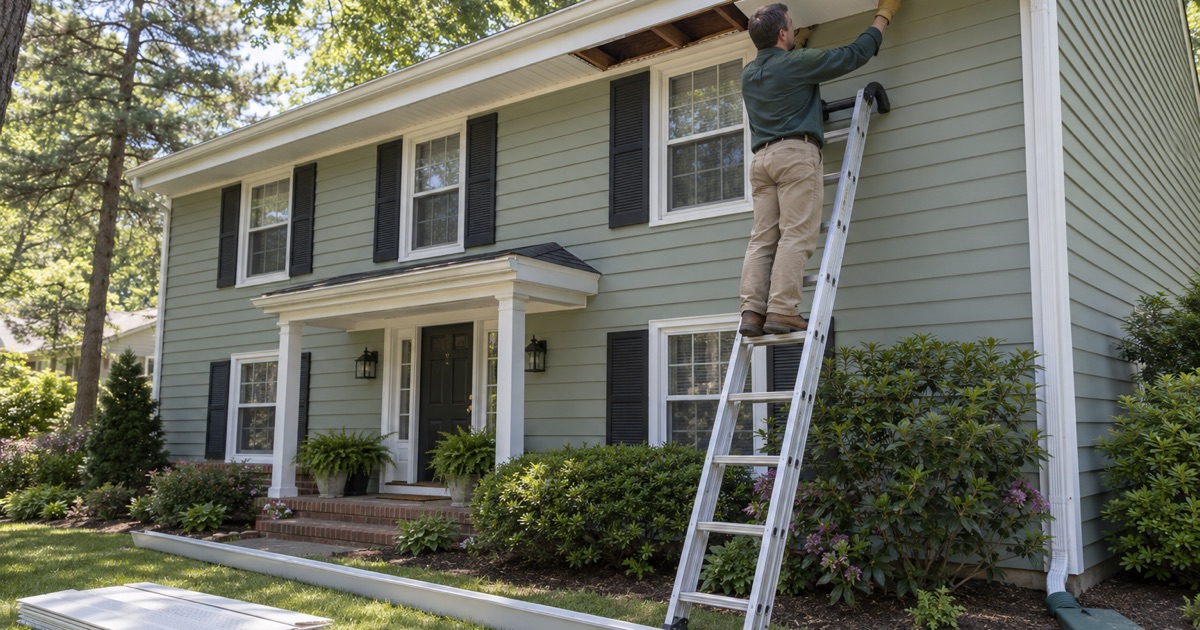
How Fascia Rots
The fascia carries the gutter and takes every drip that gets past it. When a gutter overflows, when water curls under the roof edge because there is no gutter apron or drip edge, or when a gutter hangs too far below the shingles, the back of the board stays wet after each storm. Paint peels, joints open, and rot spreads along the grain, often unseen until the gutter starts to sag.
Rot frequently hides behind a gutter that still looks fine from the ground. The first visible sign is usually spike heads backing out, a gutter that will not stay pitched, or paint blistering along the lower edge of the board.
Finding and Showing the Damage
We test the fascia by probing it at intervals, paying particular attention to corners, the areas around downspout outlets and spots below roof valleys, where water concentrates. Soft sections are marked and photographed, and we show them to you before any wood is removed. The photos also give you a record if the repair is part of an insurance claim or a home sale.
Replacement Boards and Finishes
Rotted sections are cut out back to sound wood and replaced with new boards fastened securely to the rafter tails. Depending on how the rest of the house is trimmed, the new fascia is primed and painted or covered with an aluminum fascia wrap that sheds water and does not need repainting. Low-maintenance PVC trim boards are another option for owners who never want to deal with rotted fascia again.
Soffit Repair and Attic Ventilation
Damaged Soffit Panels
Soffits are made of wood, vinyl or aluminum, and each fails in its own way. Wood soffits rot where water runs back from a failing fascia, vinyl panels crack or come loose, and aluminum panels dent or pull out of their channels. We replace damaged panels with matching material, so the underside of the eave looks continuous rather than patched.
Where the soffit has been damaged by water, we look at the fascia above it at the same time. The two are joined, and repairing one while leaving the other wet only moves the problem a few inches.
Keeping Soffit Vents Open
Vented soffit panels let air enter the attic at the eaves and leave through ridge or roof vents, which keeps the roof deck cooler in winter and drier year round. Painting over vents, stuffing them with insulation from inside, or replacing vented panels with solid ones cuts that airflow. A poorly ventilated attic is one of the main contributors to ice dams, which then back water up into gutters and fascia.
When we replace soffit, we keep or restore the venting. We also tell you if insulation inside the attic is blocking the airflow at the eaves, since new vented panels cannot help if the space behind them is packed shut.
Sealing Gaps Against Animals
A loose soffit panel or a rotted corner gives squirrels, birds and insects a way into the attic. Once we repair the soffit and fascia, the eave is closed off again with sound material. If an animal is already living in the attic, it should be dealt with before the opening is sealed, and we hold the repair until that is done.
Lead Paint on Older Fascia and Trim
Pre-1978 Painted Trim
Howell’s housing stock spans every decade, including 677 homes built in 1939 or earlier and 3,037 built in the 1960s, according to Census estimates. On any house built before 1978, painted fascia, soffit and trim may contain lead paint, and work that disturbs it falls under the EPA Renovation, Repair and Painting rule (40 CFR 745), which sets how painted surfaces may be disturbed and how the work area is handled.
What That Means for Your Repair
For the homeowner, the practical effect is that cutting out and replacing painted fascia on an older house is done with containment and careful cleanup rather than by tearing boards down over the lawn. We discuss the age of the house and the trim during the estimate, so you know before work begins how the painted surfaces will be handled.
Fascia Work and the Gutters Above It
Rehanging the Gutter on Sound Wood
Once the fascia is repaired, the gutter goes back up on hidden hangers screwed into the new board, not on the old spikes that likely contributed to the problem. We reset the pitch toward each outlet as we rehang it, so water drains rather than pooling against the new wood.
Fixing the Water Source
A fascia repair only lasts if the water that caused the rot is stopped. We add a gutter apron or drip edge where the roof edge was sending water behind the gutter, correct a gutter that hung too low, and clear or enlarge downspouts that were causing overflow. That way the new board stays dry after the next storm instead of starting to rot all over again.
- 20+ Years in Business
- Seamless Gutters Formed On Site
- Before-and-After Photos